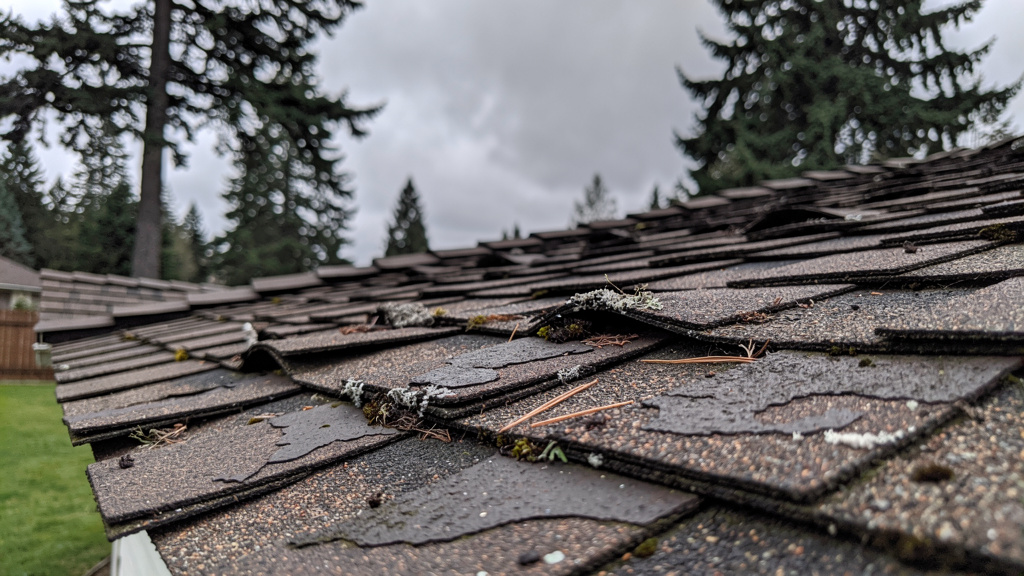
A roof leak requires immediate action to prevent extensive water damage and mold growth that can develop within 48 hours.
Why Emergency Roof Repairs Matter More in Seattle
Seattle’s climate creates unique challenges for roof leaks that make swift action critical. The Pacific Northwest’s constant moisture from rain, combined with frequent windstorms and moss growth, drives higher emergency repair costs compared to other regions .
What makes Seattle roof emergencies particularly concerning is the extended wet season. While a small leak might seem manageable in drier climates, Seattle’s prolonged rainfall can turn minor damage into major structural problems quickly. The Washington State Department of Health specifically warns that mold grows best when there’s moisture from leaky roofs, and recommends immediate action to stop water leaks and repair damaged roofing (Source: Washington State Department of Health).
Seattle’s housing stock also presents accessibility challenges. Steep roofs, narrow driveways, and limited property access common throughout the area impact labor costs and response times for emergency repairs (Source: RoofSmart). This means planning your emergency response before you need it becomes even more important.
What Are the First Steps When You Discover a Roof Leak?
Move quickly but safely — contain water damage inside while documenting everything for insurance claims.
Your immediate priority is stopping interior water damage from spreading. Place buckets, tarps, or plastic sheeting under active leaks. Move furniture, electronics, and valuables away from dripping areas. Take photos of both the interior damage and the ceiling leak location — you’ll need these for insurance documentation.
Do not attempt to climb on your roof during a storm or when surfaces are wet. Seattle’s frequent rain makes roofs dangerously slippery, and emergency room visits won’t solve your leak problem. Instead, focus on damage control inside while waiting for professional help.
If water is actively pouring through the ceiling, you may need to puncture the bulging drywall with a screwdriver to create a controlled drain point. This prevents the ceiling from collapsing under water weight, though it sounds counterintuitive.
Turn off electricity to any fixtures or outlets near the leak area. Water and electricity create serious safety hazards that can complicate your emergency situation.
How Much Does Emergency Roof Repair Cost in Seattle?
Emergency roof repair costs in Seattle range from $400 to $15,000+ depending on damage extent and roofing material .
Most Seattle homeowners pay between $1,000-$3,000 for emergency roof repairs, with the average repair costing $1,540 . However, emergency work commands premium pricing due to urgency and after-hours response requirements.
Minor emergency fixes for asphalt shingle roofs typically cost $400-$1,500, covering issues like replacing a few damaged shingles or sealing small flashing gaps (Source: Orca Roofing). Metal roof emergency repairs run higher at $1,000-$5,000+ due to specialized materials and labor requirements.
Emergency tarping services cost $500-$1,500 in Seattle depending on roof complexity and accessibility challenges (Source: RoofSmart). While expensive, tarping prevents thousands in additional water damage while permanent repairs are scheduled.
The hidden costs add up quickly. Interior water damage mitigation — drying walls, floors, and insulation — ranges from $3,000-$5,000 in the Seattle area (Source: RoofSmart). If mold develops within 48 hours of the leak, remediation costs can exceed $10,000 on top of the original repair (Source: RoofSmart).
When Should You Call Emergency Roofing Professionals?
Call immediately if water is actively entering your home, electrical hazards exist, or structural damage is visible.
Some situations absolutely require professional emergency response. Active water intrusion during storms needs immediate tarping to prevent catastrophic interior damage. Any leak near electrical fixtures, ceiling fans, or light switches creates safety hazards that demand professional assessment.
Visible structural damage — sagging ceiling areas, cracked roof decking, or damaged support beams — indicates problems beyond simple shingle replacement. These issues require immediate professional evaluation to ensure your home remains safe for occupancy.
Large leak areas or multiple leak points suggest widespread roof failure that emergency patching won’t adequately address. Professional contractors can assess whether temporary repairs will hold until permanent solutions can be implemented.
Don’t attempt emergency repairs yourself on steep roofs, during storms, or when ice is present. Seattle’s wet conditions make roof work extremely dangerous for untrained individuals, and injuries will only complicate your emergency situation.
How Do Seattle Building Codes Affect Emergency Repairs?
Washington state requires permits when repairing more than 500 square feet of roofing area (Source: Cobalt Exteriors).
Most emergency leak repairs fall below the 500 square foot threshold, meaning permits typically aren’t required for immediate temporary fixes. However, if emergency assessment reveals extensive damage requiring major repairs, permits become necessary before permanent work begins.
Washington State Building Code requires roof replacement to include removal of all existing layers down to the roof deck (Source: Washington State Building Code Council). This affects repair scope if emergency damage reveals underlying problems with multiple roof layers or deteriorated decking.
Emergency drainage requirements matter during major storm events. The state building code mandates emergency overflow drains or scuppers when roof perimeter construction extends above the roof surface (Source: Washington State Building Code Council). This prevents water from backing up and causing additional structural damage.
Flashing installation must prevent moisture from entering walls and roofs through joints per state code requirements (Source: Washington State Building Code Council). Emergency repairs that don’t address proper flashing may fail inspection if permits are later required.
What Should You Do After Emergency Repairs Are Complete?
Document everything, contact your insurance company, and schedule permanent repairs within 30 days of temporary fixes.
Take detailed photos of all damage — both exterior roof damage and interior water damage — before and after emergency repairs. Insurance companies require comprehensive documentation to process claims effectively, and photos taken during the emergency help establish the timeline and extent of damage.
Contact your insurance company within 24-48 hours of discovering the leak. Many policies have specific notification requirements for water damage claims, and delays can complicate coverage. Be prepared to provide photos, contractor estimates, and detailed descriptions of the emergency response actions you took.
Schedule permanent repairs promptly. Emergency tarps and temporary patches are designed to buy time, not serve as long-term solutions. Seattle’s weather will test temporary repairs quickly, and insurance companies may deny coverage for secondary damage if permanent repairs are unreasonably delayed.
Keep all receipts for emergency services, temporary repairs, damaged belongings, and alternative housing if your home becomes temporarily uninhabitable. These costs may be covered under your policy’s additional living expenses provisions.
Water-damaged materials must be cleaned and dried within 24-48 hours to prevent mold growth according to Washington State health guidelines (Source: Washington State Department of Health). Monitor previously wet areas for signs of mold development, which can cause health issues for people with allergies or asthma (Source: Washington State Department of Health).
FAQ
Q: Can I use a tarp from the hardware store for emergency roof protection?
Yes, but professional-grade tarps with proper securing methods work better than basic tarps that can blow off or leak.
Q: Will my homeowner’s insurance cover emergency roof repair costs?
Most policies cover sudden storm damage but not maintenance issues or gradual deterioration — check your specific policy terms.
Q: How long do emergency roof repairs typically last in Seattle weather?
Professional emergency repairs last 30-90 days depending on weather conditions, but should be replaced with permanent solutions promptly.
Q: Should I clean up water damage myself or hire professionals?
Minor water cleanup is manageable, but extensive damage or potential mold situations require professional remediation services.
Q: Do I need a permit for emergency tarping or temporary leak repairs?
Emergency temporary repairs typically don’t require permits, but permanent repairs over 500 square feet need permits in Washington.
Sources
- Washington State Building Code Council: Chapter 15 Roof Assemblies and Rooftop Structures
- Washington State Department of Health: Mold Prevention and Health Guidelines
- Angi: Seattle Roof Repair Cost Data
- RoofSmart: Storm Damage Repair Costs and Interior Damage Mitigation
- Orca Roofing: Emergency Repair Cost Guide for Bellevue & Seattle
- Cobalt Exteriors: Washington State Roof Permit Requirements
RoofNW understands that roof emergencies don’t wait for convenient timing. Their team provides 24/7 emergency response throughout the Seattle metro area, helping homeowners protect their properties when unexpected leaks occur. With experience handling everything from storm damage to equipment failures, they can assess your situation and recommend the most cost-effective approach to get your roof watertight again.