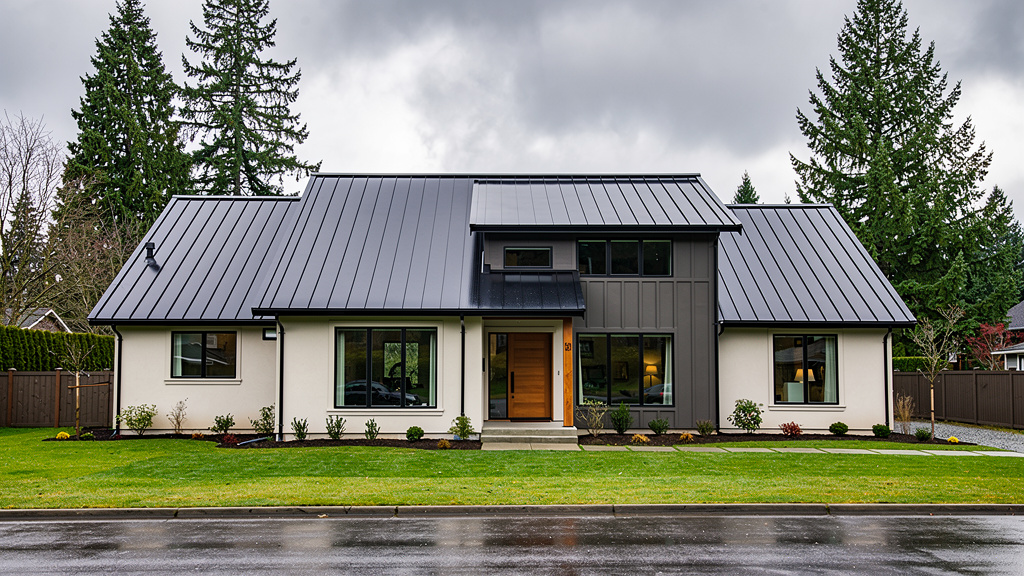
Yes, a metal roof is worth the investment in this area. The upfront cost is double that of asphalt, but metal roofs last 40-70 years versus 15-25 years for shingles in the Pacific Northwest climate.
Why Metal Roofing Makes Sense in Seattle
the local climate creates unique challenges that make metal roofing particularly valuable. With over 150 rainy days annually, moisture resistance becomes critical (Source: SEA Renovation). Traditional asphalt shingles struggle with the constant wet conditions, developing moss, algae, and mildew that reduce their lifespan significantly.
Metal roofs naturally resist moss, algae, and mildew unlike asphalt or wood roofing materials. This resistance isn’t just cosmetic — it prevents the structural damage that comes when organic growth holds moisture against your roof deck. In Seattle’s storm-prone environment, metal roofing also performs exceptionally well against heavy rain, strong winds, and the temperature swings common in the Pacific Northwest.
The smooth surface of metal roofing sheds rain and snow efficiently, preventing water pooling that can lead to ice dam formation during Seattle’s occasional winter freezes (Source: SEA Renovation). This drainage advantage becomes especially important on lower-slope roofs common in many Seattle neighborhoods.
How Much Do Metal Roofs Cost in this climate?
Metal roofing installation costs $12.50 to $20.50 per square foot in this area, roughly double the cost of asphalt shingles (Source: RoofingCalc). For a typical 3,000-square-foot home, expect to pay approximately $65,000 for a complete metal roof installation (Source: RoofSmart).
The price varies significantly by metal type. G-90 galvanized steel shingles cost $10.00 to $16.50 per square foot, while aluminum standing seam systems cost $12.50 to $20.50 per square foot (Source: RoofingCalc). Premium materials like zinc can push costs to $85,000 for the same 3,000-square-foot home (Source: RoofSmart).
Installation complexity affects pricing. Standing-seam metal roof panel systems can be installed without removing existing roof coverings under Washington building code, potentially saving $3,000-$5,000 in tear-off costs (Source: State of Washington). However, this overlay approach only works when the existing roof structure is sound and doesn’t exceed local building code layer limits.
How Long Do Metal Roofs Last in Seattle’s Climate?
Metal roofing can last 40-70 years with minimal maintenance requirements in the local climate (Source: SEA Renovation). This lifespan significantly exceeds asphalt shingles, which typically last 15-25 years in the Pacific Northwest’s challenging conditions.
The longevity comes from metal’s resistance to Seattle’s primary roof killers: moisture, moss, and temperature cycling. Unlike asphalt shingles that become brittle and crack from repeated wet-dry cycles, metal maintains its integrity through decades of Seattle weather. The smooth surface prevents debris accumulation that traps moisture and accelerates deterioration.
Proper installation following manufacturer guidelines and Washington State Building Code requirements ensures maximum lifespan (Source: Puget Sound Energy). Metal flashing must be corrosion resistant with minimum thickness of 0.019 inch to meet state requirements (Source: State of Washington). Quality installation includes proper fastening, adequate ventilation, and correct flashing details around penetrations.
What Are the Financial Benefits Over Time?
The long-term financial picture favors metal roofing despite higher upfront costs. A metal roof lasting 50 years eliminates the need for one or two complete asphalt roof replacements, each costing $15,000-$25,000. This replacement avoidance alone can justify the initial investment.
Metal roofs can increase home value by approximately $8,000 in the the local area, providing immediate equity return (Source: National Roofing Contractors Association). Energy savings add ongoing value through reduced cooling costs, though heating-dominated Seattle sees less dramatic utility bill reductions than sunnier climates.
Insurance companies occasionally offer discounts for metal roofing due to fire and wind resistance, though specific savings vary by provider. The durability also means fewer emergency repairs — metal roofs rarely suffer the sudden failures common with aging asphalt systems during Seattle’s winter storms.
| Roof Type | Upfront Cost (3,000 sq ft) | Expected Lifespan | Cost Per Year | Total 50-Year Cost |
|---|---|---|---|---|
| Metal (Steel) | $65,000 | 50+ years | $1,300 | $65,000 |
| Metal (Aluminum) | $69,000 | 50+ years | $1,380 | $69,000 |
| Asphalt Shingles | $25,000 | 20 years | $1,250 | $75,000 (3 replacements) |
When Should You Call a Professional for Metal Roofing?
Metal roof installation requires professional expertise from the initial assessment through final inspection. Unlike asphalt shingles, metal roofing involves specialized fastening systems, thermal expansion considerations, and precise flashing details that affect long-term performance.
Contact a licensed roofing contractor if your current roof shows signs of failure: missing or curling shingles, moss growth covering more than 30% of the surface, or multiple leak points. Don’t wait for complete failure — metal roof installation over damaged decking requires expensive structural repairs that increase project costs significantly.
Professional installation ensures compliance with manufacturer warranties, which often require certified installer participation. The National Roofing Contractors Association provides technical standards and guidance that reputable contractors follow (Source: National Roofing Contractors Association). Proper installation also meets Washington State Building Code requirements for wind load resistance and weather sealing.
What Should Seattle Homeowners Do Next?
Start with a professional roof assessment to determine your current roof’s remaining lifespan and structural condition. An independent inspection costs $150-$400 but reveals whether your roof deck can support metal roofing without reinforcement.
Research metal roofing styles that complement your home’s architecture and neighborhood character. Standing seam provides the best weather resistance for the local climate, while metal shingles offer traditional appearance with modern durability. Visit local installations to see how different metals weather in the Pacific Northwest environment.
Get quotes from multiple licensed contractors, ensuring each includes material specifications, warranty terms, and installation timeline. Quality installations may take longer but prevent the callbacks and premature failures that plague rushed jobs. Verify contractor licensing through Washington State Department of Labor and Industries before signing any agreements.
FAQ
Q: Can metal roofing be installed over existing shingles in this climate?
Yes, Washington building code allows metal panel systems over existing roofing, but only if structural capacity and layer limits permit.
Q: Do metal roofs make noise during Seattle’s frequent rainstorms?
Properly installed metal roofs with adequate insulation and underlayment are no noisier than asphalt shingles during rain.
Q: Will a metal roof increase my your home’s property taxes?
Improved roofing may increase assessed value, but the increase is typically modest compared to the added home value.
Q: Do metal roofs attract lightning strikes in this climate?
No, metal roofs don’t attract lightning and actually provide better protection than other materials if struck.
Q: Can I get rebates for installing a metal roof in Seattle?
Puget Sound Energy offers rebates for energy efficiency improvements, though specific metal roofing rebates vary by program.
Sources
- State of Washington: Washington State Building Code 2021, Chapter 15 Roof Assemblies
- RoofingCalc: How Much Does a New Roof Cost in this area, WA?
- RoofSmart: How Much Does it Cost to Install a Metal Roof in the Greater Seattle Area?
- SEA Renovation: Top 5 Roofing Materials for the area Homes: Durability Guide
- National Roofing Contractors Association: Industry standards and technical guidance
- Puget Sound Energy: Get Rebates to Lower Your PSE Bills
RoofNW helps local homeowners navigate roofing decisions with local expertise and connections to qualified contractors. Contact RoofNW for personalized guidance on whether metal roofing fits your home’s needs and budget in the Pacific Northwest climate.