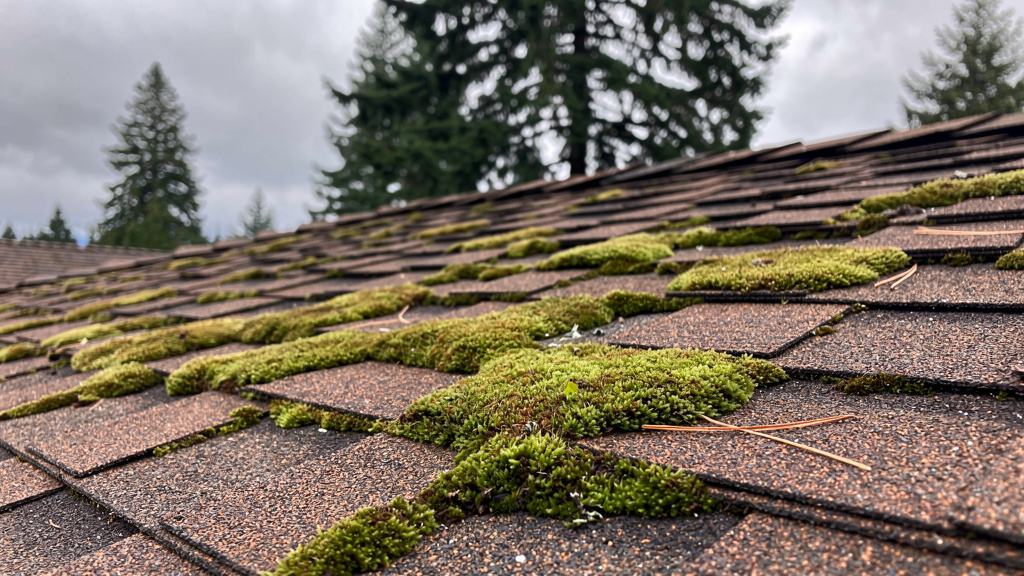
Seattle homeowners can prevent moss damage through zinc strips, regular cleaning, improved ventilation, and tree trimming to reduce moisture and shade on roof surfaces.
Why Moss Prevention Matters in Seattle
Washington’s combination of mild temperatures and persistent moisture creates near-ideal conditions for moss colonization on roof surfaces (Source: Washington Roof Authority). Seattle receives an average of 38 inches of precipitation annually on the west side of the Cascades, with some areas exceeding 100 inches per year (Source: Washington Roof Authority).
This constant moisture, combined with frequent rain, high humidity, limited sunlight, and heavy tree cover, contributes to steady moss growth on north-facing roof slopes (Source: Elite Roofing NW). The Pacific Northwest’s perfect storm of conditions means moss isn’t just a cosmetic issue—it’s a structural threat.
Moss holds moisture against shingles and shortens roof lifespan by 5 to 10 years under documented test conditions (Source: Washington Roof Authority). The moss traps water against your shingles, accelerating granule loss and potentially voiding manufacturer warranties. Most Western Washington homeowners should have roofs inspected at least once per year to catch moss problems early (Source: Elite Roofing NW).
What Makes Moss Grow on Seattle Roofs?
Moss requires sufficient moisture for at least part of the year, and Seattle delivers that in abundance (Source: Pacific Northwest Extension). The moist environment of rooftops shaded by trees creates ideal conditions for moss, even if the roof dries out for a few months annually.
Wood and composite shingles make suitable homes for moss, while slick metal roofs are more difficult for moss colonization (Source: Pacific Northwest Extension). Mosses disperse primarily through windblown spores and depend on liquid moisture to reproduce sexually (Source: Pacific Northwest Extension).
North-facing roof slopes receive less direct sunlight and stay damp longer after rain, making them prime targets. Areas under tree cover remain shaded and moist throughout the day. Gutters that overflow or don’t drain properly create additional moisture problems. Poor attic ventilation allows condensation buildup that feeds moss growth from below.
The key is understanding that moss doesn’t just appear—it needs the right combination of shade, moisture, and organic material to establish colonies on your roof.
How Do Zinc Strips Prevent Moss Growth?
Zinc strips disrupt moss and algae formation by releasing zinc ions when rainwater flows over them (Source: This Old House). These ions flow down the roof surface, creating an environment hostile to moss colonization.
Z-STOP zinc strips cost $37.50 per 50-foot roll and include 26 neoprene washered roofing nails for installation (Source: WesPac / Z-STOP). The strips are 2.5 inches wide and made from 99.2% pure zinc (Source: WesPac / Z-STOP).
Installation involves fastening strips to the top of the roof on both sides of the ridge cap, below chimneys, and near dormers. Most homeowners with DIY experience can install zinc strips safely on low-pitch roofs (Source: This Old House). The strips are cost-effective and offer long-lasting protection, especially useful for homes in high-rain or humidity areas.
Zinc strips work best when installed before moss establishes itself. Once moss colonies are thick, you’ll need to remove existing growth first, then install strips to prevent regrowth. The zinc ions provide continuous protection as long as the strips remain in place.
What’s the Most Effective Cleaning Method?
Professional moss removal should use gentle agitation with a roof brush to prevent granule loss (Source: Valentine Roofing). Pressure washing is never recommended for roof cleaning and can damage shingles by stripping protective granules (Source: Valentine Roofing).
Average roof moss removal cost in Seattle ranges from $280-$368, with most homeowners spending $300-$600 for complete removal (Source: Homeyou). Professionals charge between $60-$90 per hour for moss removal services (Source: Homeyou).
Annual roof maintenance starts at $329, while one-time cleanings start at $549 (Source: Valentine Roofing). The difference reflects the complexity of established moss colonies versus routine maintenance cleaning.
Safe removal involves applying moss-killing solutions, allowing time for the moss to die, then gently brushing away dead growth. This process protects shingle granules while eliminating moss roots that could regrow. Professional services include safety equipment and insurance coverage that DIY cleaning lacks.
How Much Does Professional Prevention Cost?
| Service | Cost Range | Timeline | Best For |
|---|---|---|---|
| Annual maintenance cleaning | $329-$400 | 2-4 hours | Prevention-focused homes |
| One-time moss removal | $549-$800 | 4-8 hours | Moderate moss growth |
| Heavy moss removal | $800-$1,200 | 6-10 hours | Severe infestations |
| Zinc strip installation | $200-$500 | 2-3 hours | Long-term prevention |
| Gutter cleaning add-on | $150-$300 | 1-2 hours | Complete moisture control |
These costs reflect Seattle-area pricing and include labor, materials, and basic equipment. Steep roofs or multi-story homes command higher rates due to safety requirements.
When Should You Call a Roofing Professional?
Call a professional immediately if you see moss covering more than 30% of your roof surface or if moss has created thick, spongy mats. Other warning signs include missing or damaged shingles, clogged gutters causing overflow, or moss growing in roof valleys where water collects.
Washington State requires stringent waterproofing guidelines to protect against moisture and moss growth (Source: Anytime Roofing Co.). Roofing contractors must be licensed and registered through the Department of Labor & Industries (Source: Anytime Roofing Co.).
Professional assessment makes sense for steep roofs, three-story homes, or when you’re uncomfortable working at height. Contractors have specialized equipment, insurance coverage, and knowledge of local building codes. They can also identify underlying problems like poor ventilation or flashing issues that contribute to moss growth.
Seattle homeowners don’t need permits for roof repairs under $6,000 in a six-month period if not changing the building envelope (Source: Seattle Department of Construction and Inspections). However, all work must meet code requirements regardless of permit status.
What Should Seattle Homeowners Do Next?
Start with a thorough roof inspection from the ground using binoculars to identify moss colonies, especially on north-facing slopes. Schedule professional cleaning if moss covers significant areas—attempting DIY removal on steep or high roofs creates unnecessary safety risks.
Consider zinc strip installation during your next roof maintenance visit. The strips provide long-term protection and cost less than repeated cleaning services. Trim overhanging tree branches to increase sunlight exposure and reduce organic debris accumulation.
Improve attic ventilation to reduce moisture buildup from below. Clean gutters regularly to prevent overflow that creates additional moisture problems. Document your roof’s condition with photos to track changes over time and establish maintenance records for insurance purposes.
For immediate concerns, contact a licensed roofing contractor for assessment. Early intervention costs significantly less than dealing with moss-related shingle damage or leaks.
FAQ
Q: How often should I clean moss off my Seattle roof?
Most Seattle roofs need moss removal every 2-3 years, or annually for heavily shaded homes with significant tree cover.
Q: Can I pressure wash moss off my roof myself?
Never pressure wash your roof. High-pressure water strips protective granules from shingles and can force water under shingles, causing leaks.
Q: Do zinc strips work on all roof types?
Zinc strips work best on asphalt and wood shingles. Metal roofs naturally resist moss but may still benefit from strips near problem areas.
Q: Will moss removal damage my shingles?
Professional removal using soft brushing techniques protects shingles. DIY scraping or power washing can cause significant granule loss and void warranties.
Q: Should I treat moss myself with bleach solutions?
Avoid bleach—it can damage plants below and doesn’t prevent regrowth. Professional moss treatments are safer and more effective long-term.
Sources
- Washington Roof Authority: Moss and Algae Information
- WesPac / Z-STOP: Z-Stop Zinc Strips for Roof Moss Prevention
- Pacific Northwest Extension: Living in the Land of Mosses
- This Old House: How To Prevent Roof Moss With Zinc Strips
- Homeyou: Roof Moss Removal in Seattle, WA – Costs
- Valentine Roofing: Seattle roof cleaning service for moss removal
- Elite Roofing NW: Why Moss Is More Than a Cosmetic Problem for Pacific Northwest Roofs
- Anytime Roofing Co.: International Building Code and Washington Roofing Standards
- Seattle Department of Construction and Inspections: Do You Need a Permit?
RoofNW connects Seattle-area homeowners with experienced roofing professionals who understand local moss prevention challenges and use proven methods to protect your investment.