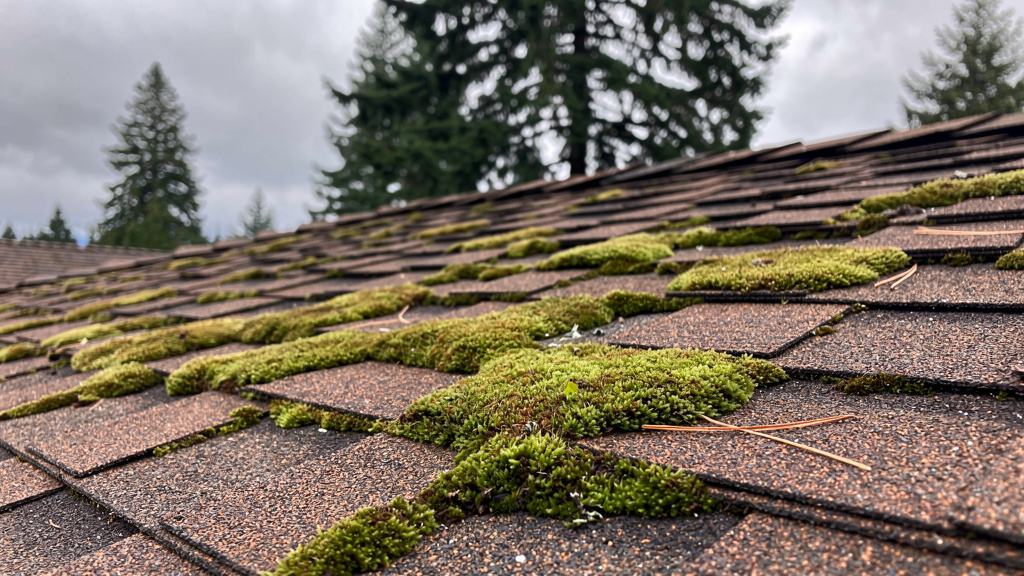
Seattle homeowners prevent moss damage through regular cleaning, zinc sulfate treatments, tree trimming for sunlight, and professional maintenance every 1-2 years.
Why Moss Prevention Matters in Seattle
Seattle’s climate creates perfect conditions for roof moss growth. With over 150 days of rain annually, the persistent moisture and mild temperatures allow moss to colonize and thrive on roofing materials (Source: National Roof Certification & Inspection Association). Washington’s combination of mild temperatures and persistent moisture creates ideal conditions for moss colonization that can shorten roof lifespan by 5 to 10 years under documented test conditions (Source: National Roof Certification & Inspection Association).
Moss holds moisture against shingles and accelerates granule loss, which voids manufacturer warranties and raises repair costs by up to 30% (Source: National Roof Certification & Inspection Association). Unlike drier climates where moss remains dormant, Seattle’s year-round humidity keeps moss actively growing and damaging roofing materials. The Washington State Building Code Council establishes minimum standards for roofing assemblies, but prevention remains the homeowner’s responsibility (Source: Washington State Department of Labor & Industries).
What Makes Seattle Roofs Vulnerable to Moss Damage?
North-facing roof sections, shaded areas under trees, and older asphalt shingles create prime conditions for moss establishment and spread.
Seattle homes face unique moss challenges due to the marine climate and dense tree canopy. Moss thrives in shaded areas where morning dew and rain linger longer. North-facing roof slopes receive less direct sunlight, staying damp throughout the day. Overhanging branches from Seattle’s abundant Douglas firs, maples, and cedars create additional shade while dropping organic debris that feeds moss growth.
Older asphalt shingles become more vulnerable as protective granules wear away, creating rough surfaces where moss spores can anchor. Gutters clogged with Pacific Northwest vegetation cause water backup, creating consistently moist conditions along roof edges. Areas around chimneys, skylights, and vents often develop moss first because these spots trap moisture and debris. Poor attic ventilation compounds the problem by allowing humidity to build up beneath the roof deck.
How Should Homeowners Clean Existing Moss Growth?
Professional soft washing with specialized cleaning solutions removes moss safely without damaging shingles or voiding warranties.
Never use pressure washing to remove roof moss. Shingle manufacturers specifically indicate pressure should never be used to clean shingles, as it loosens granules and causes premature failure . Professional soft washing uses low-pressure application of specialized bleach-based cleaning agents that kill moss without roof damage (Source: Washington State Department of Labor & Industries).
Professional moss removal services in Seattle charge between $60-$90 per hour (Source: Washington State Department of Labor & Industries), with total project costs typically ranging from $280-$368 for average-sized roofs. Soft washing costs typically range from $0.30 to $0.75 per square foot (Source: National Roof Certification & Inspection Association). The gentle agitation method uses roof brushes followed by moss and algae treatment solutions that prevent regrowth.
DIY zinc sulfate treatment offers a budget-friendly option for light moss infestations. Mix 3 pounds of zinc sulfate powder in 9 gallons of water to treat 600-1,000 square feet, or use 1 pound per 3 gallons for heavy infestations covering about 200 square feet (Source: Oregon State University Extension Service). Never use zinc sulfate if your roof has copper gutters, downspouts, or flashing, as zinc corrodes copper.
What Long-Term Prevention Methods Work Best?
Tree trimming for increased sunlight exposure provides the most effective long-term moss prevention by eliminating the shade moss requires to survive.
Moss depends on shade to thrive, making tree trimming the most effective long-term solution (Source: Oregon State University Extension Service). Professional arborists can selectively prune branches to increase sunlight exposure without removing entire trees. Focus on branches hanging within 10 feet of the roof surface, particularly those creating shade on north-facing slopes.
Install zinc or copper strips along roof ridges to create natural moss deterrent. When rain flows over these metal strips, it carries trace amounts of zinc or copper ions that inhibit moss growth down the entire roof slope. Position strips 2-3 inches below the ridge line on both sides of the roof peak.
Improve gutter maintenance to prevent water backup and debris accumulation. Clean gutters twice yearly, install gutter guards if necessary, and ensure proper drainage away from the foundation. Regular roof inspections every few years help identify vulnerable areas before moss becomes established . Professional treatments prevent new growth from taking hold after initial cleaning (Source: Washington State Department of Labor & Industries).
How Much Does Professional Moss Prevention Cost in Seattle?
| Service Type | Cost Range | Coverage | Frequency |
|---|---|---|---|
| Professional Cleaning | $280-$368 | Average roof | Annual |
| Comprehensive Service | $300-$900 | Full treatment | Every 2 years |
| Maintenance Program | $329+ | Yearly service | Annual |
| Soft Washing | $0.30-$0.75/sq ft | Per square foot | As needed |
| Tree Trimming | $200-$800 | Per tree | Every 3-5 years |
Washington State roof cleaning costs typically range between $300-$900, with an average of around $750 for comprehensive treatments (Source: National Roof Certification & Inspection Association). Yearly maintenance programs start at $329, while one-time cleanings and moss removal start at $549 (Source: Washington State Department of Labor & Industries). Professional services provide better long-term value than repeated DIY attempts that may damage roofing materials.
When Should You Call a Professional?
Contact a licensed professional when moss covers more than 10% of any roof section, when DIY treatments fail, or when working on steep or high roofs.
Professional intervention becomes necessary when moss growth covers significant roof areas or when safety concerns prevent effective DIY treatment. Washington State requires all construction contractors to register with the Department of Labor & Industries and carry general liability insurance of at least $250,000 (Source: Washington State Department of Labor & Industries). Verify contractor credentials through L&I’s online database before hiring.
Call professionals immediately if you notice loose or lifting shingles, granule loss in gutters, or water stains in the attic. These signs indicate moss has already caused damage requiring expert assessment. Professional inspectors trained by organizations like the American Society of Home Inspectors can identify vulnerabilities and recommend appropriate treatment strategies .
Steep roofs, multi-story homes, or properties with complex rooflines require professional equipment and safety training. Licensed contractors have specialized tools, insurance coverage, and experience working safely on Seattle’s varied roof styles. Quality professional inspection requires proper credentials, licensing, and insurance verification (Source: National Roof Certification & Inspection Association).
What Should Seattle Homeowners Do Next?
Schedule annual roof inspections, establish a cleaning routine, and create a prevention maintenance plan before moss problems develop into expensive repairs.
Start with a comprehensive roof assessment to identify current moss growth and vulnerable areas. Professional inspectors check for signs of algae or moss growth that trap moisture and assess both exterior materials and interior attic space for hidden damage (Source: National Roof Certification & Inspection Association). Document problem areas with photos to track improvement after treatment.
Develop a seasonal maintenance schedule including spring and fall gutter cleaning, annual tree pruning, and biennial professional moss treatment. Seattle homeowners should prioritize north-facing slopes and shaded areas for more frequent monitoring. Establish relationships with licensed contractors before problems develop to ensure quick response when issues arise.
Consider upgrading to algae-resistant shingles during your next roof replacement. Modern architectural shingles with copper granules provide better moss resistance than traditional 3-tab shingles. Improve attic ventilation with ridge vents and soffit vents to reduce moisture buildup that contributes to moss growth.
FAQ
Q: How often should Seattle homeowners clean moss from their roofs?
Annual cleaning for prevention, immediate treatment when moss covers more than 10% of any roof section (Source: National Roof Certification & Inspection Association).
Q: Can I use bleach to kill roof moss myself?
Household bleach works but requires proper dilution and safety equipment. Professional treatments are safer and more effective.
Q: Will moss removal void my shingle warranty?
Proper soft washing preserves warranties. Pressure washing and aggressive scraping typically void manufacturer coverage.
Q: How long does zinc sulfate treatment last?
Properly applied zinc sulfate prevents moss regrowth for 2-3 years depending on shade and moisture conditions.
Q: Should I remove moss before or after winter?
Remove moss in late spring or early summer when dry conditions allow proper treatment and prevent winter damage.
Sources
- Washington State Department of Labor & Industries: Register as a Contractor
- Washington State Department of Labor & Industries (L&I): International Building Code and Washington Roofing Standards
- American Society of Home Inspectors (ASHI): Roof System Inspection Guidelines
- National Roof Certification & Inspection Association (NRCIA): Professional Roof Inspection Guide
- Oregon State University Extension Service: How to control roof moss and prevent long-term damage
For Seattle homeowners dealing with persistent moss problems, RoofNW connects you with licensed, insured contractors who understand Pacific Northwest roofing challenges. Professional assessment and treatment protect your investment while ensuring safe, effective moss prevention that preserves manufacturer warranties.