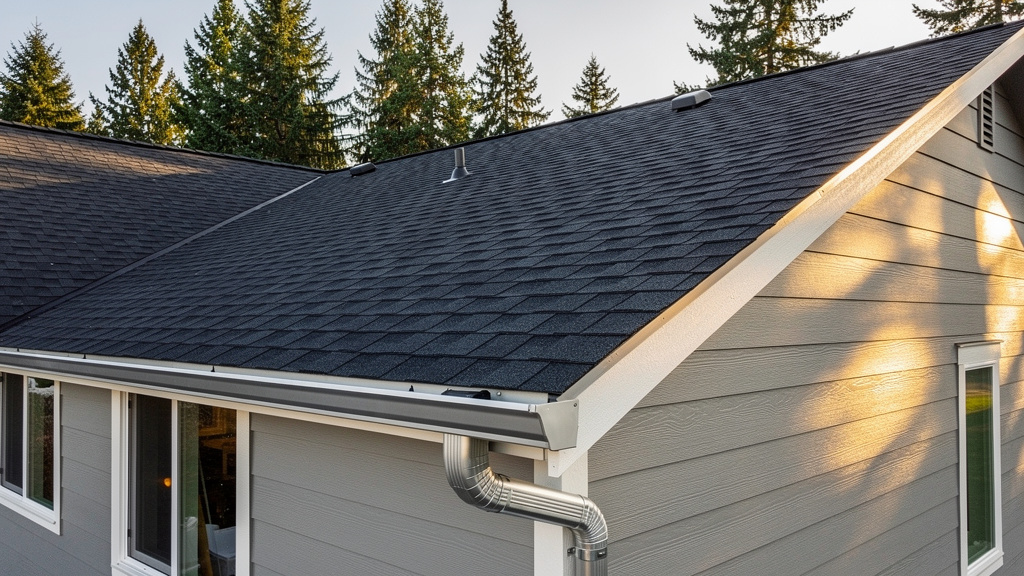
How Much Does a Roof Replacement Cost in Seattle?
Roof replacement typically costs between $9,000 and $30,000 depending on home size and materials chosen (Source: Homze). Most homeowners pay around $20,000-$30,000 for asphalt shingles.
Why Does Seattle’s Climate Make Roof Replacement More Complex?
Seattle’s unique climate creates specific challenges that affect both roof lifespan and replacement costs. The city averages over 150 rainy days annually, creating prime conditions for water damage and moss growth (Source: Elite Gold Contractors). This persistent moisture and limited sunlight promote moss growth, rot, and premature shingle deterioration that you won’t see in drier climates.
The combination of cool temperatures, frequent rain, and heavy tree cover creates ideal conditions for moss, algae, and lichen growth (Source: Elite Gold Contractors). Seattle’s climate accelerates roof wear even without major storms — moisture weakens the adhesives and sealants that secure shingles, flashing, and membranes over time (Source: Elite Gold Contractors).
Water damage from the Pacific Northwest’s wet climate can add $4,000-$12,000 to roof replacement costs when rotting boards need replacement (Source: RoofSmart). It’s common for contractors to find a few boards requiring replacement due to water damage during tear-off, especially on older homes.
What Does Asphalt Shingle Replacement Cost in Seattle?
Asphalt shingle roof replacement costs $6.50 to $10.50 per square foot locally (Source: RoofingCalc.com). For a typical 2,000 square foot roof, expect to pay $13,000 to $21,000 total.
The price breaks down into several components. Material costs account for roughly 40% of the total, while labor makes up the remaining 60%. The area’s higher labor costs compared to other Washington cities reflect the skilled workforce needed and the region’s cost of living.
Architectural shingles cost more than basic 3-tab shingles but offer better wind resistance and longer warranties — important factors in Pacific Northwest weather. Most contractors recommend architectural shingles for their improved durability against moss growth and water penetration.
Tear-off of existing materials adds $1,000-$2,000 to the project cost. Washington State Building Code requires roof replacement to include removal of all existing layers down to the roof deck (Source: Washington State Building Code Council). This regulation prevents the structural problems that come from excessive weight and hidden damage.
Disposal fees for old roofing materials run $300-$800 depending on the amount of material and local dump fees. Local disposal costs tend to be higher than rural Washington areas.
How Much More Do Metal Roofs Cost in Seattle?
Metal roof replacement costs $12.50 to $20.50 per square foot locally (Source: RoofingCalc.com). For a 2,000 square foot home, metal roofing runs $25,000 to $41,000 installed.
Metal roofing has gained popularity in the Pacific Northwest due to its durability and ability to shed rain and snow efficiently (Source: SEA Renovation). Metal roofs can last 40-70 years and resist moss and algae growth common in this climate (Source: SEA Renovation). This longevity makes metal roofing cost-effective over time despite higher upfront costs.
Standing seam metal roofing performs best in the Pacific Northwest because the raised seams direct water away from fasteners. Exposed fastener metal roofing costs less initially but requires more maintenance as gaskets can fail over time.
Installation of metal roofing requires specialized skills and tools, which contributes to higher labor costs. However, metal roofs install faster than shingles in many cases, potentially reducing overall project time from the typical 5-7 days to 3-5 days (Source: Homze).
What Permits and Regulations Apply to Seattle Roof Replacement?
Permits for roof replacement usually range between $250 and $500 depending on project scope (Source: City of Seattle Department of Construction and Inspections).
For residential buildings, building permits are not required if repaired substrate is limited to five 4×8 foot sheets (Source: City of Bellevue). However, full roof replacements always require permits and inspections to ensure compliance with current building codes.
When insulation is entirely above the roof deck or the assembly has no existing insulation, roof replacement must provide the same level of insulation required for new construction (Source: City of Bellevue). This energy code requirement can add insulation costs to your project.
Multi-unit residential buildings requiring work costing more than 5% of assessed value must include building enclosure documents and inspection (Source: City of Bellevue). This applies to condominiums and townhomes in many local neighborhoods.
Contractors here must carry workers compensation insurance through Washington’s state-funded system (Source: Washington State Department of Labor & Industries). Roofing contractors are assigned to risk class 0506, one of the highest premium classifications in construction (Source: Washington State Department of Labor & Industries).
How Do Different Materials Compare for Seattle Homes?
| Material Type | Cost Per Sq Ft | Lifespan | Moss Resistance | Best For |
|---|---|---|---|---|
| 3-Tab Shingles | $6.50-$8.50 | 15-20 years | Poor | Budget projects |
| Architectural Shingles | $8.50-$10.50 | 20-30 years | Fair | Most PNW homes |
| Metal Standing Seam | $15.00-$20.50 | 40-70 years | Excellent | Long-term investment |
| Wood Shingles | $10.50-$16.50 | 25-30 years | Poor | Historic homes |
| PVC Membrane | $8.50-$14.50 | 20-30 years | Excellent | Flat roofs |
PVC roofing is an excellent choice for flat roofs in wet and cold climates (Source: SEA Renovation). However, most homes in the area have sloped roofs where asphalt or metal materials perform better.
Wood shingles cost $10.50 to $16.50 per square foot installed (Source: RoofingCalc.com), but they require more maintenance in this wet climate. Wood shakes cost slightly more at $12.50 to $18.50 per square foot (Source: RoofingCalc.com).
When Should You Call a Professional Instead of DIY?
Roof replacement always requires professional installation due to safety risks, permit requirements, and warranty concerns. The region’s frequent rain makes roofing work particularly dangerous for untrained individuals.
Signs you need professional help include multiple leaks, missing shingles after storms, sagging roof lines, or moss covering more than 30% of the roof surface. Water stains on interior ceilings indicate potential structural damage that requires professional assessment.
If you’re seeing granules in gutters, curled shingle edges, or exposed nail heads, these indicate your roof is approaching replacement time. Don’t wait for leaks to appear — the region’s wet climate can cause extensive interior damage quickly once water penetrates the roof assembly.
Professional contractors have the insurance coverage required by Washington law and understand local building code requirements. They also provide warranties on both materials and workmanship that protect your investment.
What Should Seattle Homeowners Do Next?
Start by getting quotes from at least three licensed contractors during the spring or summer months when weather conditions allow thorough inspections. Most roof replacement in this regions take 5-7 days depending on weather and complexity (Source: Homze).
Check that contractors carry current workers compensation insurance and general liability coverage. The Roofing Contractors Association of Washington represents over 600 contractors statewide and provides resources for finding qualified professionals (Source: Roofing Contractors Association of Washington).
Ask contractors to explain what they find during roof inspections and get written estimates that break down material and labor costs separately. Quality contractors will identify potential decking repairs before starting work, not surprise you with additional costs after tear-off begins.
Schedule your roof replacement during the drier months between June and September when possible. This reduces weather delays and improves installation quality.
FAQ
Q: Do I need a permit for roof replacement in Seattle?
Yes, full roof replacements require permits. Only repairs to five 4×8 sheets or less are exempt from permit requirements.
Q: How long does roof replacement take in Seattle?
Most roof replacement in this regions take 5-7 days depending on weather conditions, roof size, and material complexity.
Q: What’s the best roofing material for Seattle’s climate?
Metal roofing performs best long-term due to moss resistance. Architectural shingles offer good performance at lower cost.
Q: Can I install new shingles over existing ones?
No, Washington State Building Code requires removal of all existing layers down to the roof deck for replacements.
Q: When is the best time to replace a roof in Seattle?
June through September offers the driest weather conditions for roof replacement work and fewer weather delays.
Sources
- City of Bellevue: Permit and Energy Code Requirements for Roofing Projects
- City of Seattle Department of Construction and Inspections: Seattle Building Code Chapter 15
- Elite Gold Contractors: Why Roofs Wear Down Faster in Seattle’s Climate
- Homze: How Much Does a Roof Replacement Cost in Seattle? 2025 Pricing Guide
- Roofing Contractors Association of Washington: Industry Resources and Contractor Directory
- RoofingCalc.com: How Much Does a New Roof Cost in Seattle, WA?
- RoofSmart: How Much Does a Roof Cost in 2026? Prices for Seattle Homeowners
- SEA Renovation: Top 5 Roofing Materials for Seattle Homes: Durability Guide
- Washington State Building Code Council: Chapter 15 Roof Assemblies and Rooftop Structures
- Washington State Department of Labor & Industries: Contractor Workers Compensation Requirements
RoofNW connects Seattle-area homeowners with experienced local roofing contractors who understand the unique challenges of the Pacific Northwest climate. Our network includes licensed professionals serving Seattle, Bellevue, Tacoma, Everett, Kirkland, Redmond, Renton, Federal Way, and Kent with transparent pricing and quality workmanship warranties.